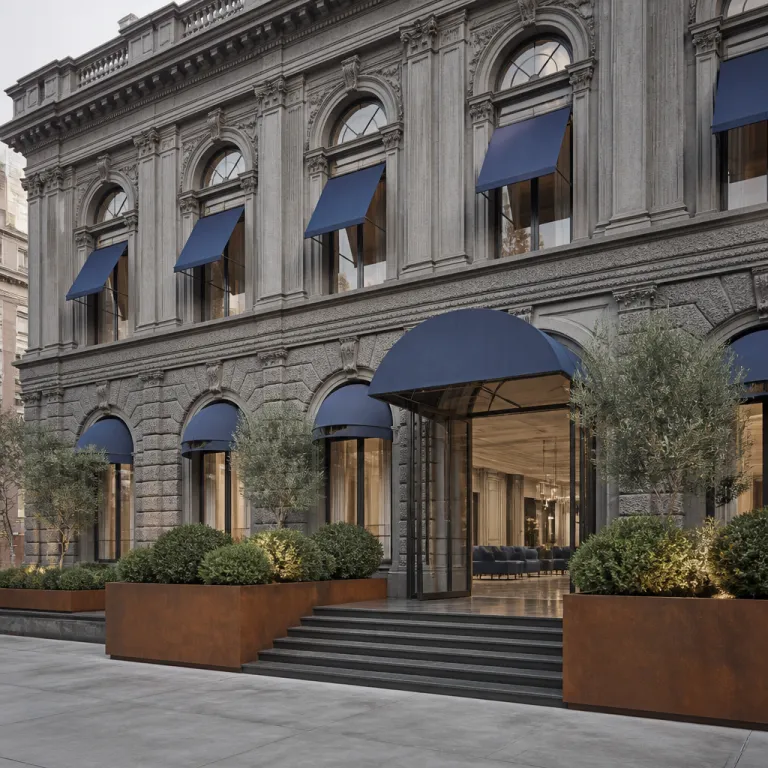
Corinthia Rome hotel opening palazzo: from central bank to grand hospitality statement
The story of Corinthia Rome begins in the heart of the city, inside a neoclassical palazzo that once housed offices of the Banca d’Italia. This early twentieth-century institution on Piazza del Parlamento has now reopened as Corinthia Rome, a luxury hotel that treats its financial past as a design brief rather than a constraint. For travelers choosing between heritage hotels in Rome, this property shows how a building’s original purpose can shape a new era of hospitality.
The palazzo’s façade anchors a discreet corner of the Campo Marzio district, a short walk from the Pantheon and Piazza del Popolo. Step through the entrance and you read the building’s history in the marble staircases, the high ceilings, and the original frescoes that Corinthia Hotels chose to restore rather than erase. The result is a Roman hotel where every corridor and suite feels connected to the city’s financial and political narrative, from brass details that recall vault fittings to the measured hush of former executive floors.
Corinthia Rome sits within a broader collection of heritage hotels operated by Corinthia Hotels, including Corinthia London in the former Hotel Metropole. That track record matters for guests who value authenticity, because the group understands how to add contemporary comfort without diluting a property’s character. In Rome, the conversion of this neoclassical palazzo into a 60-room hotel with 21 suites, as outlined in Corinthia’s official launch communications, shows how careful design can turn institutional spaces into intimate luxury experiences.
The building’s 9,700 square meters, a figure cited in project briefings, once organized cash flows and gold reserves; now they orchestrate hospitality rituals and curated, chef-led dining. Vaults that once guarded currency now host a spa concept, while grand banking halls have become salons and lounges that frame Roman light through tall windows. For business-leisure travelers extending a stay in Rome, the opening of Corinthia Rome in this former bank offers both a compelling story and a practical base in the city’s historic core.
Why neoclassical architecture suits modern luxury hospitality
Neoclassical architecture, especially in a city like Rome, naturally lends itself to luxury hospitality because of its proportions, symmetry, and light. At Corinthia Rome, the palazzo’s structure gives the design studio a framework of tall windows, generous corridors, and ceremonial staircases that already feel hotel-ready. Instead of fighting the building, the design team uses these Roman volumes to create suites and public spaces that feel both grand and calm, with daylight sliding across stone floors and plasterwork.
Inside the property, the former banking halls become a collection of salons where guests can read, meet, or simply watch the choreography of the lobby. Corinthia Hotels worked with GA Design as the lead studio, and the interiors layer Italian materials, soft textiles, and custom lighting over the original frescoes and stonework. In press material, the designers describe their approach as one that “lets the palazzo speak first, then adds comfort in a quieter voice,” underlining that the aim is not to recreate a period set, but to add contemporary ease while keeping the bones of the palazzo visible in every suite and corridor.
Heritage suites such as the Theodoli Heritage Suite show how a single room can express the entire design concept behind Corinthia Rome. Here, original frescoes are preserved above modern furniture, and the layout respects the Roman proportions of the former executive offices. Guests who choose these heritage suite categories are not just booking more space; they are buying into a narrative where the building’s past and present coexist, from restored ceiling paintings to discreetly integrated reading lamps and charging points.
The broader market context matters too, because Rome has seen a wave of luxury hotel openings from brands like Bulgari and Rosewood. Corinthia Rome enters this field with a clear point of difference, using its neoclassical palazzo and banking heritage as the anchor for its experiences. For travelers who value architectural authenticity, this property aligns more closely with meticulous restoration projects where careful preservation underlines how heritage hotels can command higher rates when the story, the craftsmanship, and the physical fabric of the building all support one another.
Inside the rooms and suites: where the bank’s past meets guest comfort
The 60 rooms and 21 suites at Corinthia Rome are designed to feel residential, even though they occupy what were once offices and meeting rooms of a central bank. Each suite uses the building’s generous ceiling heights and tall windows to frame views of Rome’s rooftops, del Parlamento façades, or the quiet lanes of Campo Marzio. For guests, the building’s transformation becomes tangible in the way each room balances institutional heritage with soft, layered luxury, from upholstered headboards to thick curtains that soften the echo of stone.
Standard rooms lean into Italian craftsmanship, with bespoke furniture, marble bathrooms, and subtle references to Roman geometry in the textiles. Higher-category suites, including the Theodoli Heritage Suite, add separate living areas, curated art, and restored original frescoes that give a sense of staying inside a private palazzo rather than a conventional hotel. Business-leisure travelers will appreciate how the design integrates generous work surfaces and discreet technology without disturbing the calm of the interiors, allowing a laptop and conference call to sit comfortably alongside a carved fireplace or cornice.
The design studio’s approach is quietly confident, avoiding flashy gestures in favor of thoughtful details that reward a slow read of the space. GA Design leads the interiors, while communication and visual storytelling around the opening have involved creative partners such as Maloney Fox Studio, often referenced as Fox Studio under the direction of Jonathan Maloney in image credits. Photography is typically consolidated under the studio’s name, signaling a visual narrative that captures the tension between the building’s banking past and its new hospitality life, from close-ups of door hardware to wide shots of restored halls.
For travelers comparing neighborhoods, Corinthia Rome’s position between Piazza del Parlamento and the wider Campo Marzio district offers quick access to both business and leisure addresses. Those who like to plan multi-city trips might pair a stay here with other urban heritage properties, using curated city hotel guides as a benchmark for service and design expectations. In every case, the conversion of this palazzo stands out because the rooms and suites feel like a considered response to the building, not a generic luxury template applied to any city.
Culinary and wellness: from vault spa to Michelin starred Italian dining
Food and wellness are where the hotel’s narrative becomes most playful, especially in how it reuses the bank’s vaults. The spa occupies former secure areas below ground, turning thick walls and heavy doors into a cocoon for treatments and thermal experiences. For guests, the contrast between the building’s austere past and the softness of the spa rituals adds a memorable layer to their stay, as they move from cool stone corridors into warm pools, steam, and low, amber lighting.
Dining is led by chef Carlo Cracco, the Michelin-starred Italian chef whose name already carries weight with serious food travelers and who is referenced in Corinthia’s Rome announcements as the culinary partner. At Corinthia Rome, chef Carlo Cracco oversees Viride, the signature restaurant, and acts as a curated chef presence across the property’s dining collection, from breakfast rooms to more casual bars. The presence of a starred chef in a heritage hotel reinforces the sense that this is not just another opening, but a hospitality project that takes both gastronomy and architecture seriously.
Menus lean into local produce and Roman recipes, reinterpreted with the precision you expect from a Michelin-starred kitchen. Guests can read the city’s culinary history in dishes that reference Campo Marzio markets, Lazio wines, and classic Italian desserts, all served in spaces framed by original frescoes and neoclassical detailing. For business travelers hosting clients, this combination of serious dining and atmospheric rooms can turn a simple meal into a strategic hospitality experience, whether it is a quiet lunch in a panelled salon or an evening tasting menu under painted ceilings.
Visual storytelling again plays a role, with many restaurant and bar images credited in launch materials to Fox Studio and Jonathan Maloney. These photographs help future guests understand how the dining rooms sit within the broader design language of the hotel, from table settings that echo banking ledgers to bar counters that pick up the veining of historic stone. If you are planning a wider European itinerary, you can apply the same level of scrutiny you might use when assessing any flagship hotel, checking how Corinthia Rome handles reservations, dietary requests, and special occasions before you book.
Investment, regulation, and the future of heritage hotels in Rome
The Corinthia Rome project also illustrates a broader investment story playing out across Europe’s historic cities. Heritage hotels, especially those in neoclassical or early twentieth-century buildings, tend to command higher average daily rates and stronger occupancy than contemporary properties in similar locations. Investors and sovereign wealth funds have noticed, targeting assets where a strong narrative and protected architecture can underpin long-term value and justify the complexity of adaptive reuse.
In Rome, strict preservation regulations shape every stage of such conversions, from façade cleaning to the treatment of original frescoes and structural elements. Corinthia Hotels, working with Italian authorities, had to respect these constraints while still delivering modern luxury expectations such as high-performance glazing, advanced climate control, and discreet technology in every suite. The success of this property suggests that regulation does not have to dilute hospitality; instead, it can force a more intelligent design response that keeps the building’s character intact and legible to guests.
Ownership and operation structures also matter, with private equity players like Reuben Brothers, cited in development announcements, often partnering with experienced operators such as Corinthia Hotels to manage complex heritage assets. This combination of capital and hospitality expertise allows projects like Corinthia Rome to move beyond cosmetic renovation into true adaptive reuse, where the building’s former life as a bank is legible in the new guest experiences. For travelers, that means a stay that feels rooted in place rather than parachuted into a generic luxury template.
As more openings join the Roman skyline, from Bulgari to Rosewood, the competitive set for Corinthia Rome will only intensify. Yet the specificity of this neoclassical palazzo on Piazza del Parlamento, its Campo Marzio address, and its layered collection of suites, dining rooms, and wellness spaces give it a clear identity. For guests booking through curated platforms that focus on once-in-a-lifetime hotel experiences rather than simple bucket list ticks, Corinthia Rome represents the kind of property that can quietly redefine how you think about heritage hotels long after you check out.
FAQ
What is the history of the Corinthia Rome building ?
The palazzo dates from the early twentieth century and previously housed offices of the Banca d’Italia before its conversion into a luxury hotel, as outlined in Corinthia Hotels’ official project information.
Who is the chef at Corinthia Rome ?
Carlo Cracco, renowned Italian chef and Michelin-starred restaurateur, is named in launch communications as the culinary partner for Corinthia Rome.
What amenities does Corinthia Rome offer ?
Luxury rooms, spa, fine dining, heritage suites, and carefully restored public spaces within a neoclassical palazzo.
Where is Corinthia Rome located within the city ?
Corinthia Rome is located on Piazza del Parlamento, in the Campo Marzio district, placing guests within walking distance of major Roman landmarks and key business addresses. This central position makes the hotel convenient for both sightseeing and meetings.
How does Corinthia Rome compare to other new luxury hotels in Rome ?
Corinthia Rome competes with recent openings from brands like Bulgari and Rosewood, but it differentiates itself through its neoclassical palazzo setting, its banking heritage, and its focus on original frescoes and heritage suites. Travelers who prioritize architectural authenticity and a strong sense of place may find this property more compelling than newer builds.
Sources
Corinthia Hotels official press releases and project briefings; communications from Reuben Brothers; Italian heritage and tourism authorities.