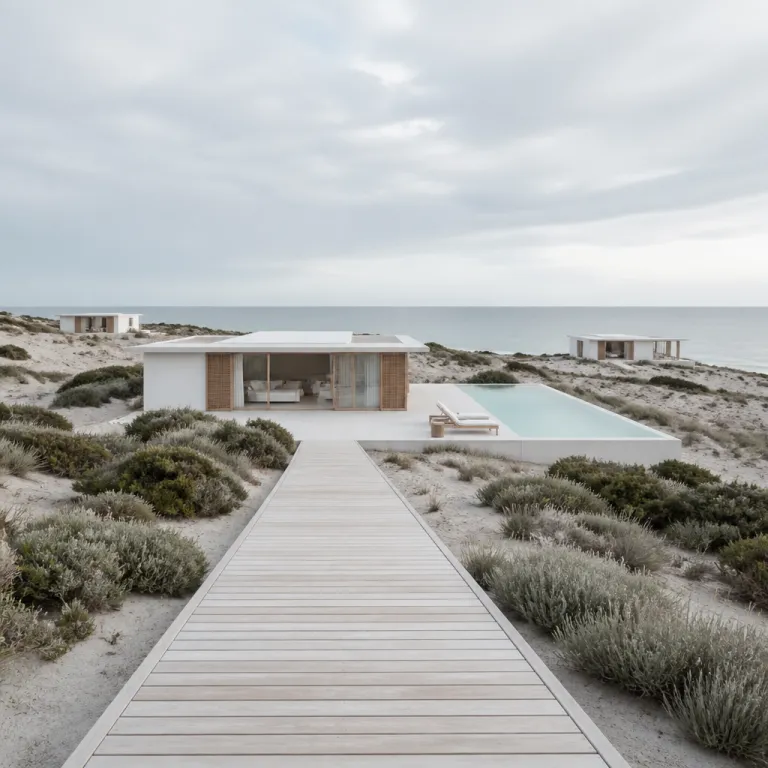
Why low density island luxury hotel exclusive stays are redefining status
On the most coveted shores, low density island luxury hotel exclusive stays have quietly become the new status symbol. Privacy is no longer a soft benefit; it is the core product, and the premium that couples pay for a genuinely low density property is reshaping how luxury travel is priced and perceived. When an island hotel limits itself to 8 to 25 keys, every decision about space, service, and access is made with intimacy rather than volume in mind.
Across the globe, elite hotels on remote island coastlines now cap guest numbers to protect both privacy and the environment, and the result is a radically different experience from even the best large resort. Analyses from firms such as STR, HVS, and JLL indicate that properties with fewer than 30 rooms often command 35 to 50 percent higher average daily rates than larger competitors in the same bay, because each villa or residence effectively carries the cost of five star operations. For example, STR’s global luxury segment snapshots (2019–2023), HVS’s boutique and lifestyle hotel performance reviews (2020–2022), and JLL’s “Global Hotel Investment Outlook” series (2021–2023) all highlight the ADR premium achieved by small key-count resorts. That higher density of investment per guest translates into more staff, more space, and more thoughtful amenities per couple, from private pools to tailored boat cruises that never feel like group excursions.
For travelers, the phrase low density island luxury hotel exclusive should signal more than marketing language; it should mean a tangible sense of calm from the moment the boat leaves the mainland or the seaplane lifts off from the international airport. You notice it in the silence on the white sand beach, in the absence of queues for beach access or the pool, and in the way the concierge service greets you by name before you have even reached your villa. Instead of the social theatre of a crowded ultra luxury resort, you are choosing a discreet private island retreat where privacy, space, and time are the rarest amenities on the site.
The economics of capping guests on an island resort
Behind every carefully run low density island retreat lies a very deliberate economic model. When an island resort chooses to operate with 16 villas and a maximum of 32 guests, as several Indian Ocean properties do according to published resort fact sheets updated between 2021 and 2023, it sacrifices volume in favor of higher per guest revenue and lower operational complexity. That trade off only works when the hotel can deliver a level of privacy and personalization that justifies premium pricing to a demanding luxury travel audience.
Intimate island hotels typically run staff to guest ratios of 3 to 1 or higher, a figure echoed in many private island resort press kits and operations overviews released in the last five years, which allows the concierge service to orchestrate private beach dinners, flexible dining times, and spontaneous boat cruises without friction. The property layout is equally intentional; villas are spaced for privacy, many with a private pool, outdoor shower, and direct beach access so couples rarely need to share facilities. On a well designed site, infinity pools, shared pools, and even the main beach are never crowded, because the density of guests per metre of shoreline is kept deliberately low.
From a cost perspective, these hotels rely on longer average stays, higher spend on experiences such as jet ski safaris or guided snorkeling, and a strong repeat guest base to offset the limited capacity. That is why booking windows are longer, cancellation policies stricter, and privacy policy language often more detailed, especially when the resort operates on a fully private island with gated access from the main airport. If you are planning a similar low density stay in another destination, guides such as this analysis of how to book premium hotels in Bali for an unforgettable island stay can help you benchmark rates and service levels before you commit.
Why island geography makes low density feel more exclusive
An urban low density hotel can feel calm, but an island setting changes the equation entirely. Water forms a natural boundary, so when a resort controls every metre of beach and every path from jetty to villa, it can guarantee a level of privacy that city properties rarely match. The combination of limited geography, controlled access, and a single management team overseeing the whole property turns a low density island luxury hotel exclusive stay into a self contained world.
On a true private island, every element of the experience is curated, from the boat transfer from the international airport or regional airstrip to the way staff manage beach access for each family or couple. You may arrive by small plane to a nearby bay, then transfer by boat to a jetty where only checked in guests are allowed through gated access, which instantly reinforces the sense of a privacy resort. Once on the island, paths are often sand, villas are tucked into greenery with water views, and the only footprints on the powder white shoreline are yours and perhaps those of a passing heron.
This geography also allows resorts to manage environmental density, not just guest numbers, by limiting built residences and preserving large tracts of natural habitat between each villa. Operators such as Royal Davui Island Resort in Fiji or Fregate Island Private in the Seychelles state in their own materials that they cap capacity to protect fragile reefs and birdlife as much as to enhance guest privacy. For couples weighing whether to choose an island or a mainland coastal hotel, resources like this guide to elevated family luxury in Turks and Caicos at Treasure Beach Village show how small scale island style planning can also work on larger archipelagos.
How the guest experience changes when there are only 20 people on the island
Spend a few nights at a carefully run low density island hideaway and you quickly realise how different the rhythm feels. There is no scramble for sun loungers, no need to reserve a table for dinner, and no sense of being processed through a system, because the hotel is built around individual names rather than room numbers. Staff know your preferred wine by the second evening, and the concierge service quietly adjusts your schedule when the weather shifts, without you ever seeing a clipboard.
On islands such as Cousine Island in the Seychelles or Elysian Luxury Eco Island Retreat in the Whitsundays, guest capacity is often capped at around 20 people, a figure confirmed in their published resort overviews and fact sheets as of 2022–2023, which means the resort can offer genuinely flexible dining and activity times. Want a private beach breakfast at the far end of the bay, followed by a late morning in your villa pool and an afternoon jet ski session with no one else in sight? The team can usually make it happen, because there are simply fewer competing requests and more staff per guest to manage logistics. Even shared amenities such as infinity pools, yoga decks, and small gyms feel like private residences, because you rarely encounter more than one other couple at a time.
For many travelers, the most memorable details are the quiet ones; the outdoor shower screened by palms where you rinse off powder white sand, the way the private pool catches the last light over the water views, the silence at night broken only by waves. These are the moments that justify the premium over a larger resort with similar room hardware but far higher density. If you enjoy this level of immersion in nature and space, you may also appreciate low crowd mountain stays such as the elevated mountain hot springs escape in Saratoga, Wyoming, which apply similar low density principles in a very different landscape.
Where low density island luxury is the rule, not the exception
Certain destinations have made the low density island luxury hotel exclusive model their default rather than a niche. In the Maldives, many atoll resorts operate with 20 to 40 villas spread across entire islands, and some of the most sought after properties limit themselves to fewer than 30 keys to preserve privacy and reef health, as outlined in their own fact sheets and sustainability reports updated through 2023. The same pattern appears in the Seychelles, where islands such as Fregate Island Private and Cousine Island host only a handful of villas along extensive stretches of white sand beach.
In the South Pacific, Royal Davui Island Resort in Fiji runs just 16 villas on a compact island, while in the Florida Keys, Little Palm Island Resort & Spa caps its thatched roof bungalows at around 30 to maintain a sense of seclusion, according to their official accommodation descriptions and media kits. These hotels often sit a boat ride away from the nearest airport, which adds logistical complexity but also filters out casual visitors and day trippers. Guests typically arrive via a dedicated launch or seaplane, pass through discreet gated access, and step directly into a world where the only vehicles are golf carts and the only crowds are flocks of seabirds.
Even within larger archipelagos such as Indonesia or Greece, a growing number of properties are adopting the low density model on semi private peninsulas or small satellite islands. Here, the resort may not own the entire island, but it controls a bay or headland with its own direct beach and carefully managed beach access for guests only. For couples planning a multi stop itinerary, combining one of these ultra luxury island stays with a more urban hotel can create a satisfying contrast between high energy city days and complete privacy on the water.
How to identify a genuine low density island property when you book
Not every quiet hotel is a true low density island luxury hotel exclusive property, and the distinction matters when you are paying a premium. A resort with low occupancy because of weak demand will not deliver the same energy, staffing, or maintenance standards as a property intentionally designed with fewer rooms and higher per guest investment. Your task as a traveler is to read between the lines of the website and booking engine to understand which category a hotel falls into.
Start with hard numbers; check how many villas, suites, or residences the property offers, and compare that to the total size of the island or coastline it occupies. A genuine low density resort will usually highlight its limited key count, generous spacing between villas, and features such as private pools, private beach coves, and infinity pools that are shared by very few guests. Look for clear information on access as well, including whether the island is fully private, how transfers from the international airport or local airport are handled, and whether there is any public path that might compromise privacy.
Then examine the soft signals; does the site emphasise concierge service, tailored experiences, and flexible dining, or does it focus mainly on volume driven amenities such as large conference spaces and multiple buffet restaurants? Read the privacy policy to understand how guest data is handled, but also pay attention to how the hotel talks about environmental density, conservation, and partnerships with local organisations. When in doubt, email the reservations team with specific questions about maximum guest numbers, staff to guest ratios, and how often non resident visitors are allowed onto the property, because genuine low density hotels are usually proud to share these details.
Designing your stay: matching amenities, activities, and privacy to your travel style
Once you have chosen a low density island luxury hotel exclusive property, the next step is to shape the stay around how you actually like to travel. Couples who value complete privacy might prioritise a villa with a private pool, outdoor shower, and direct beach access, while those who enjoy a little social energy may prefer a residence closer to the main infinity pools and bar. Either way, the advantage of low density is that you can move between solitude and connection without ever feeling crowded.
Think about how you want to use the beach; do you imagine long walks on powder white sand with no one in sight, or do you prefer a serviced private beach cabana with drinks and light music near the pool? Many island resorts can offer both, zoning one side of the bay for quiet and another for low key activity such as jet ski launches or boat cruises. The best hotels will also tailor amenities for different types of travelers, from couples seeking candlelit dinners to family groups who need flexible meal times and safe shallow water views for children.
Finally, pay attention to how the property communicates between your booking and arrival, including any latest posts or updates on the site that explain seasonal changes, conservation projects, or new experiences. Some of the most forward thinking operators explicitly state that they limit guest numbers to enhance privacy, provide personalized services, and protect the environment, and they frame this as a shared project with guests. As one set of resort FAQs puts it, “Why do luxury island resorts limit guest numbers? To enhance privacy, provide personalized services, and protect the environment.”
Key figures behind low density island luxury
- Many leading private island resorts operate with an average of 16 villas and a typical capacity of around 32 guests, which allows staff to maintain high service levels while preserving natural habitats between buildings (based on resort website data, fact sheets, and media kits published between 2019 and 2023).
- Properties with fewer than 30 rooms often command 35 to 50 percent higher average daily rates than larger resorts in the same destination, reflecting the premium travelers are willing to pay for space and privacy according to multiple luxury hospitality analyses from sources such as STR, HVS, and JLL, including STR’s global performance reviews (2018–2023), HVS’s boutique hotel benchmarking studies (2019–2022), and JLL’s “Global Hotel Investment Outlook” reports (2020–2023).
- Wellness and luxury travel trend reports from major consultancies and tourism boards identify privacy and digital disconnection as top drivers of high end trips, with low density environments and limited access settings consistently ranking among the most requested features for island stays in surveys conducted from 2020 onward.
- Operators of private island properties frequently partner with environmental organisations and local tourism boards to cap guest numbers, which supports reef protection, wildlife conservation, and long term destination resilience, as outlined in their sustainability reports, conservation agreements, and impact updates released over the last decade.
Frequently asked questions about low density island luxury stays
Why do luxury island resorts limit guest numbers ?
Luxury island resorts limit guest numbers to enhance privacy, provide personalized services, and protect the surrounding environment, especially in fragile marine ecosystems. By operating with fewer villas and lower density, they can reduce pressure on reefs, beaches, and freshwater resources while maintaining high staff to guest ratios. This model also supports a calmer atmosphere, which many couples now value more than traditional status symbols.
What are the main benefits of staying at a low density island resort ?
The primary benefits include increased privacy, more personalized attention from staff, and a quieter, more serene environment on both the beach and around the pool. Guests rarely compete for amenities such as sun loungers, restaurant tables, or activity slots, because capacity is capped by design. Many travelers also appreciate the stronger connection to nature that comes from having more space per person and fewer built structures on the island.
How far in advance should I book a low density island hotel ?
Because these properties have very limited capacity, it is wise to book well in advance, especially for peak seasons and popular suites or villas. Some private island resorts fill their best categories many months ahead, particularly for festive periods and school holidays. Early booking also gives the concierge service more time to plan tailored experiences such as private beach dinners or custom boat cruises.
Are low density island resorts suitable for families as well as couples ?
Many low density island resorts are designed primarily for couples, but a growing number welcome family groups with specific amenities such as multi bedroom residences, shallow pools, and flexible dining. When traveling with children, check whether the property offers supervised activities, safe beach access, and medical support within reasonable distance of the island. Always confirm age policies in advance, as some ultra luxury private island hotels operate as adults only retreats.
How can I book a stay at these exclusive resorts ?
The most reliable way to book is through the resort’s official website or by contacting its reservations team directly, which ensures access to the full range of villa categories and any current offers. Experienced luxury travel advisors can also add value by comparing different islands, checking transfer logistics from the nearest international airport, and aligning the property’s style with your expectations. For the most sought after low density islands, direct communication with the hotel often yields better room placement and more tailored pre arrival planning.