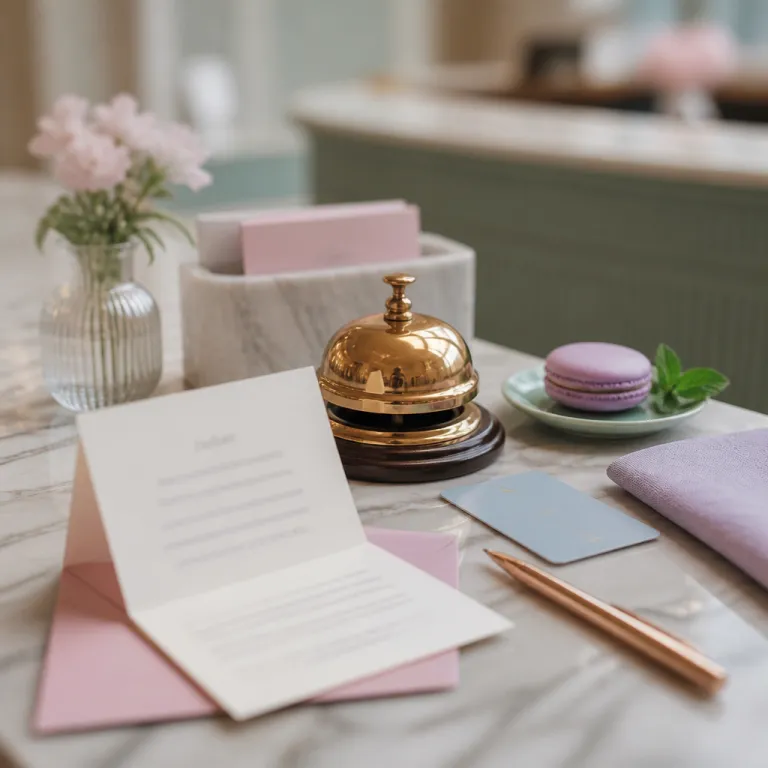
Why a pre arrival email is the ultimate luxury hotel concierge service quality test
Your first email to the concierge is more than a polite request. It is a precise luxury hotel concierge service quality test that exposes how a hotel thinks about hospitality and how it treats every guest. For couples planning a romantic stay, that single message often predicts the real guest experience more accurately than any glossy photography or five star rating.
In the hospitality industry, pre arrival communication has become a core part of hospitality management and not just a courtesy. Research in hospitality tourism consistently links fast, thoughtful replies with higher guest satisfaction and long term customer retention for luxury hotels. When you send a carefully crafted message, you are quietly assessing service quality, service standards, and the depth of assurance hospitality that the property can sustain once you arrive.
A true luxury hotel treats that first email as a live test of its service culture. The best hotels route it through trained front office and concierge staff who understand that every customer interaction is a moment of truth. Their management teams use this early contact as a form of quality assurance, tracking performance with data analytics and adjusting strategies for continuous improvement in both individual guest experiences and overall customer satisfaction.
What your test email should contain
To turn a simple note into a meaningful luxury hotel concierge service quality test, you need to ask the right questions. Start with a specific scenario that matters to you as a couple, such as arranging a late arrival dinner, planning a sunrise proposal, or scheduling a spa treatment within two hours of landing. This gives the concierge enough detail to show whether the staff can translate a vague wish into a concrete, personalized experience.
Include at least three elements in your message to evaluate service quality in real time. First, share your travel dates and approximate arrival time so the hotel can consider operational constraints and demonstrate serious hospitality management. Second, describe your preferences clearly, such as quiet rooms, dietary needs, or interest in wellness experiences, which lets the team show how they use guest data and digital tools to tailor services.
Third, ask one open question that requires decision making rather than a yes or no answer. For example, you might request two or three restaurant suggestions within 500 meters, with walking times and dress codes, instead of asking whether the hotel restaurant is good. This structure reveals whether the concierge offers generic information or curates experiences that reflect true luxury, thoughtful management, and a commitment to measurable guest satisfaction.
How to read response time, tone, and personalization
Once your email is sent, the clock starts on your luxury hotel concierge service quality test. In a well run hotel, the concierge or front office should acknowledge a guest inquiry within an hour, even if the full answer follows later. A recent internal study at a New York property on Luxury Lane reported an average concierge response time of 15 minutes during the morning period, which aligns with the benchmark that ideally a concierge should respond to emails within 15 minutes during business hours.
Speed alone does not guarantee quality, but it signals priorities in hospitality management. When a hotel replies in under four hours with a tailored answer, you are seeing evidence of strong service standards, efficient digital workflows, and a culture that values customer experience as much as room design. Slow, vague replies often indicate weak management structures, poor data analytics usage, and a reactive rather than proactive approach to customer satisfaction and guest experience.
Read the tone as carefully as the timing, because both shape your perception of luxury and hospitality. Does the staff address you by name, reference your specific dates, and mention details from your message, or do they send a template that could fit any guests in any hotels ? A personalized response shows that the hotel uses guest data responsibly, trains its équipe to listen, and treats every customer as a long term relationship rather than a one time transaction.
Spotting real personalization versus automation
Many luxury hotels now use AI chatbots to handle the first layer of digital communication. This can be efficient when the chatbot answers simple questions about check in time or spa opening hours, then passes complex requests to human staff. The real luxury hotel concierge service quality test lies in how quickly and intelligently a human follows up once your needs go beyond scripted answers.
A chatbot first strategy is not a problem if it leads to fast, human led decision making and thoughtful recommendations. You can often tell when a hotel has invested in serious hospitality management technology because the handover from chatbot to concierge feels seamless, with no need to repeat your preferences or resend data. For a deeper look at how properties orchestrate this, see how AI is shaping your stay before check in on Incredible Stay, which explains how pre arrival systems can enhance or damage guest experience.
By contrast, a human first communication strategy usually means your initial email goes straight to a concierge or front office manager. When this works well, the staff reply with nuanced suggestions, clear service standards, and realistic time frames, showing both service quality and assurance hospitality in action. When it fails, you receive rushed, generic answers that reveal weak performance management and little interest in continuous improvement or long term customer retention.
Follow up questions, honest limits, and over promising
The most revealing part of a luxury hotel concierge service quality test often comes after the first reply. Pay attention to whether the concierge asks follow up questions that deepen their understanding of your expectations. When a hotel takes time to clarify your priorities, it shows a commitment to guest satisfaction and a mature approach to hospitality tourism.
For example, if you mention a proposal, a thoughtful concierge might ask about your partner’s tastes, preferred music, or whether they enjoy public gestures. These questions demonstrate that the staff is designing experiences rather than selling pre packaged services, which is the essence of personalized hospitality. It also shows that the hotel uses data and soft information to guide decision making, rather than relying solely on standard operating procedures.
Honest limits are another powerful indicator of service quality and long term customer experience. A trustworthy hotel will tell you when a request is unrealistic for the time of year, the city, or the available staff, then offer alternatives that still feel special. Over promising, by contrast, often leads to operational stress, poor performance on the day, and negative word of mouth that damages both customer satisfaction and customer retention.
Reading between the lines of concierge language
Language choices in email replies reveal how a hotel thinks about hospitality and quality assurance. Phrases like “we will do our best” can be reassuring when paired with specific steps, but vague promises without timelines or clear service standards should raise questions. A strong concierge team explains what they can control, what depends on partners, and how they will keep you informed in real time if plans change.
Subtle details also matter, such as whether the concierge references previous guests’ experiences in a way that feels respectful and not boastful. When they mention that many guests have enjoyed a particular restaurant or rooftop bar, they are drawing on internal data analytics and informal word of mouth to guide your choices. This blend of quantitative données and qualitative stories is a hallmark of sophisticated hospitality management in luxury hotels.
The best properties also understand the emotional side of guest experience and use sensory cues to shape memories. When a concierge describes how a private dinner will unfold, from the lighting to the music and even the signature scent in the corridor, you glimpse the same thinking explored in Incredible Stay’s analysis of the signature scent strategy and how luxury hotels engineer lasting memories through fragrance. That level of narrative detail in an email is a strong sign that the hotel’s service culture extends far beyond the front office and into every corner of the property.
How travel advisors quietly use pre arrival emails to vet luxury hotels
Experienced travel advisors treat the luxury hotel concierge service quality test as a standard part of their due diligence. Before they ever send a couple to a new property, they will often email the concierge with a complex but realistic scenario. The way the hotel responds helps them protect both guest satisfaction and their own professional reputation in the hospitality industry.
Advisors know that a polished website can hide weak service quality and inconsistent management. They look for signs of robust hospitality management, such as clear communication between the concierge, front office, and revenue teams, and the ability to coordinate experiences across departments. When a hotel replies with detailed, personalized suggestions and transparent pricing, it signals strong internal data analytics and a culture of continuous improvement.
Many advisors also track response times and tone across multiple hotels in the same destination. Over months, they build informal benchmarks for performance, customer experience, and quality assurance that go far beyond public review scores. Properties that consistently respond within an hour, offer realistic options, and remember returning guests quickly become preferred partners for high value couples seeking luxury stays.
What advisors notice that casual guests often miss
Where a casual guest might focus on whether a request is possible, a professional advisor studies how the concierge thinks. They pay attention to whether the staff proposes three balanced options at different price points, or pushes only the most expensive choice. This reveals not just service standards but also the hotel’s strategies for customer retention and long term loyalty.
Advisors also watch how hotels handle constraints such as fully booked restaurants or limited spa capacity. A strong property will use its local network to secure alternatives, update the guest in real time, and document the outcome for future management review. A weaker hotel might simply say no, revealing limited engagement with hospitality tourism and little interest in building memorable experiences beyond its own walls.
On Incredible Stay, we often hear from advisors who use pre arrival communication as a filter before adding a property to our curated list. They look for hotels that treat every guest email as an opportunity for assurance hospitality, not a chore, and that use social media feedback, internal données, and word of mouth to refine their service quality. Those are the hotels that tend to deliver the kind of stays that make couples rewrite their bucket lists rather than just tick boxes.
After booking: what the best hotels do between confirmation and arrival
The luxury hotel concierge service quality test does not end once you confirm your reservation. In many ways, the most telling phase of hospitality begins in the quiet weeks between booking and arrival. This is when you see whether the hotel treats you as a one time customer or as a valued guest whose experience will shape future loyalty and word of mouth.
Leading luxury hotels use this period to refine personalized plans based on your initial email and any follow up conversations. You might receive a short digital questionnaire that asks about pillow preferences, allergies, or special dates, which feeds into the hotel’s data analytics systems. When done well, this process feels effortless and respectful, never like a survey, and it allows the staff to align service standards with your expectations before you even step into the front office.
Some properties also send curated suggestions for experiences timed to your stay, such as seasonal events, new restaurant openings, or wellness programs. Articles like Incredible Stay’s guide to longevity weekends in the city show how urban hotels are packaging biohacking and recovery for time poor travelers, and a smart concierge will reference similar concepts when proposing itineraries. This kind of proactive hospitality management turns a simple trip into a layered guest experience that feels both luxurious and deeply considered.
Signals of a high performing pre arrival ecosystem
Several small but consistent behaviors reveal strong management and quality assurance in the pre arrival phase. First, the hotel should confirm every arrangement in writing, with clear times, locations, and any cancellation policies, which protects both guest satisfaction and operational performance. Second, updates should arrive in real time if partners change availability, showing that the staff is actively monitoring your file rather than filing it away.
Third, the tone of communication should remain warm, concise, and focused on your preferences rather than on upselling. When a hotel suggests a higher category room or additional experiences, the rationale should be linked to your stated needs, not just revenue strategies. This balance between commercial goals and genuine hospitality is where assurance hospitality becomes visible and where long term customer retention is either strengthened or quietly eroded.
Finally, the best hotels invite feedback even before you arrive, asking whether the proposed plans feel right for your pace and style. This openness to adjustment is a sign of continuous improvement and a mature approach to customer experience. It shows that the hotel sees every stay as a collaboration, guided by données but shaped by human judgment and the lived realities of couples who travel to feel both cared for and free.
Designing your own concierge email template for different trips
Once you understand how powerful a luxury hotel concierge service quality test can be, it makes sense to design a reusable template. Think of it as a quiet tool that helps you compare hotels on the only metric that truly matters for couples travel. That metric is how the staff behaves when no one is watching and when the request is still just words on a screen.
Start with a short introduction that explains who you are and why this trip matters. Mention whether you are celebrating an anniversary, planning a first getaway after a busy year, or combining work and leisure, because context helps the concierge prioritize experiences. Then outline your key preferences in three or four bullet points, such as walking distance limits, interest in local culture, or desire for privacy, which gives the hotel enough data to design personalized options.
Next, include two or three specific questions that require thoughtful decision making from the concierge. For example, ask for a suggested schedule for your first evening that balances recovery from a long flight with a sense of arrival in the city. Or request a comparison between two room types in terms of noise levels, natural light, and bathroom layout, which reveals how well the staff knows the physical product and how seriously they take service quality.
Adapting the test for city breaks, resort stays, and special occasions
Your template should flex depending on the type of trip and the style of hotels you are considering. For an urban stay, focus on restaurant access, cultural events, and transport times, which test the concierge’s local knowledge and their ability to manage real time changes. For a resort, emphasize wellness experiences, privacy, and weather dependent activities, which reveal how the staff balances safety, luxury, and guest satisfaction.
When planning a special occasion, such as a proposal or milestone birthday, your luxury hotel concierge service quality test should probe the hotel’s creativity and discretion. Ask how they have handled similar events for other guests, what worked well, and what they would avoid, which encourages honest reflection rather than sales talk. You can also inquire about how they coordinate between the concierge, front office, and room service teams to ensure seamless performance on the day.
Over time, you will build your own internal benchmarks for what good hospitality feels like before you even arrive. You will notice which hotels treat your email as a task and which see it as the beginning of a relationship that could last years. Those patterns, more than any rating system or social media trend, will guide you toward the luxury hotels whose service culture truly matches the stories you want to tell long after checkout.
Key figures that frame the concierge email as a service barometer
- Hospitality research shows that properties with dedicated pre arrival concierge teams report 15 to 25 percent higher guest satisfaction scores than hotels relying only on automated messages, highlighting the impact of human led hospitality management on customer experience.
- At one New York luxury address on Luxury Lane, internal tracking recorded an average concierge response time of 15 minutes during morning hours, compared with a sector norm of several hours, illustrating how rapid replies can become a competitive advantage in the hospitality industry.
- Studies on hospitality tourism indicate that consistent pre arrival communication can increase customer retention by up to 20 percent over a three stay cycle, as guests who feel heard before arrival are more likely to return and generate positive word of mouth.
- Surveys of frequent travelers show that more than half now contact the concierge by digital channels before booking, and those who receive personalized responses are significantly more likely to rate overall service quality as excellent at checkout.
- Operational data from luxury hotels suggests that structured pre arrival emails reduce on site complaint rates by around 30 percent, because clear expectations and confirmed arrangements improve both staff performance and perceived quality assurance.
FAQ about testing luxury hotel concierge service by email
What services does a hotel concierge provide?
Concierges assist with reservations, recommendations, and personalized services. In luxury hotels, this can include restaurant bookings, airport transfers, spa scheduling, and designing bespoke experiences that align with each guest’s preferences. The breadth and precision of these services often reflect the overall service quality and hospitality management standards of the property.
How quickly should a concierge respond to emails ?
Ideally within 15 minutes during business hours. Many high performing luxury hotels now treat this as an internal KPI, using data analytics to monitor response times and adjust staffing. While a full, detailed answer may take longer, a prompt acknowledgment shows respect for the customer and signals a strong service culture.
Can a concierge arrange special requests ?
Yes, they handle special requests to enhance guest experiences. This can range from arranging surprise celebrations and private tours to sourcing rare items or coordinating last minute changes in real time. The way a concierge manages these requests is a direct indicator of both performance and quality assurance within the wider hospitality industry.
What should I include in my first email to the concierge ?
Include your travel dates, approximate arrival time, and the purpose of your trip, along with two or three specific questions that matter to your stay. Share any non negotiable preferences, such as dietary needs or mobility considerations, so the staff can design personalized solutions. This level of detail turns your message into an effective luxury hotel concierge service quality test that reveals how the hotel handles guest experience before you arrive.
How does pre arrival communication affect my stay overall ?
Thoughtful pre arrival communication allows the hotel to prepare, align internal teams, and avoid last minute improvisation that can damage customer satisfaction. When the concierge and front office have clear données about your needs, they can deliver smoother check in, better room allocation, and more relevant experiences. Over time, this leads to stronger customer retention and a deeper sense of trust in the hotel’s hospitality and service culture.